[disclaimer -- there are no new chess variants. I don't know who came up with this idea first but I'm pretty sure it wasn't me.]
By most reasonable standards, there are too many chess variants out there already. A few are actually worth playing (such Gliński's hexagonal game), the rest are of interest, if it all, more as thought experiments and programming problems.
One potentially promising area for the latter is variants of imperfect information, which leads us to familiar games like kriegspiel and this variant, facade chess.
Start with a standard board and pieces. When I say standard pieces I mean that you will have one piece that moves like a king, one piece that moves like a queen, two pieces that move like bishops and so on.
The pieces' appearance, however, will not be standard. They will look like tiny replicas of those A-frame signs restaurants put out on the sidewalk, with slots for pictures of chess pieces on either side. On most of the pieces, the picture is the same on the front and the back, but on up to three (or some other agreed on number), the pictures have been switched.
Pieces are lined up in standard position based the picture in the front but they have to move in accordance with the picture on the back (like kriegspiel, this game definitely needs a referee). If for example, the queen had a rook's picture on front of it, you would put it in a corner but you could move it any distance vertically, horizontally or diagonally.
Each move has to be weighed in terms of both position achieved and information revealed -- as soon as that rook moves diagonally, the other player will know something's up. In addition to deduction you can also find out the true identity of a piece by capturing it. Capturing a disguised piece also provides useful information about the disguised pieces still on the board.
I'm not sure how playable facade chess would be -- players would probably tend to under utilize their pieces (moving rooks like pawns or queens like bishops so as not to give away their identities) -- making for a slow game but from an analytic standpoint, the variant could still provide interesting problems. Chess strategies are complex to start with; imagine adding a layer of uncertainty and questions about how much value to put on concealing information.
Saturday, March 9, 2013

Alexandria Puzzles for SAT vocabulary building
The following puzzles contain words from SAT vocabulary lists.


| SAT Words Group 6 | |||||||||||||||||||||||||||||||||||||||||||||||||||||||||||||||||||||||||||||||||||||||||||||||||||||||||||||||||||||||||||||||||||||||||||||||||||||||||||||||||||||||||||||||||||||||||||||||||||||||||||||||||||||||||||||||||||||||||||||||||||||||||||||||||||||||||||||||||||||||||||||||||||||||||||||||||||||||||||||||||||||||||||||||||||||||||||||||||||||||||||||||||||||||||||||||||||||||||||||||||||||||||||||||||||||||||||||||||||||||||||||||||||||||||||||||||||||||||||||||||||||||||||||||||||||||||||||
|---|---|---|---|---|---|---|---|---|---|---|---|---|---|---|---|---|---|---|---|---|---|---|---|---|---|---|---|---|---|---|---|---|---|---|---|---|---|---|---|---|---|---|---|---|---|---|---|---|---|---|---|---|---|---|---|---|---|---|---|---|---|---|---|---|---|---|---|---|---|---|---|---|---|---|---|---|---|---|---|---|---|---|---|---|---|---|---|---|---|---|---|---|---|---|---|---|---|---|---|---|---|---|---|---|---|---|---|---|---|---|---|---|---|---|---|---|---|---|---|---|---|---|---|---|---|---|---|---|---|---|---|---|---|---|---|---|---|---|---|---|---|---|---|---|---|---|---|---|---|---|---|---|---|---|---|---|---|---|---|---|---|---|---|---|---|---|---|---|---|---|---|---|---|---|---|---|---|---|---|---|---|---|---|---|---|---|---|---|---|---|---|---|---|---|---|---|---|---|---|---|---|---|---|---|---|---|---|---|---|---|---|---|---|---|---|---|---|---|---|---|---|---|---|---|---|---|---|---|---|---|---|---|---|---|---|---|---|---|---|---|---|---|---|---|---|---|---|---|---|---|---|---|---|---|---|---|---|---|---|---|---|---|---|---|---|---|---|---|---|---|---|---|---|---|---|---|---|---|---|---|---|---|---|---|---|---|---|---|---|---|---|---|---|---|---|---|---|---|---|---|---|---|---|---|---|---|---|---|---|---|---|---|---|---|---|---|---|---|---|---|---|---|---|---|---|---|---|---|---|---|---|---|---|---|---|---|---|---|---|---|---|---|---|---|---|---|---|---|---|---|---|---|---|---|---|---|---|---|---|---|---|---|---|---|---|---|---|---|---|---|---|---|---|---|---|---|---|---|---|---|---|---|---|---|---|---|---|---|---|---|---|---|---|---|---|---|---|---|---|---|---|---|---|---|---|---|---|---|---|---|---|---|---|---|---|---|---|---|---|---|---|---|---|---|---|---|---|---|---|---|---|---|---|---|---|---|---|---|---|---|---|---|---|---|---|---|---|---|---|---|---|---|---|---|---|---|---|---|---|---|---|---|---|---|---|---|---|---|---|---|---|---|---|---|---|---|---|---|---|---|---|---|---|---|---|---|---|---|---|---|---|---|---|---|---|---|---|---|---|---|---|---|---|---|---|---|---|---|---|
|
|
| |||||||||||||||||||||||||||||||||||||||||||||||||||||||||||||||||||||||||||||||||||||||||||||||||||||||||||||||||||||||||||||||||||||||||||||||||||||||||||||||||||||||||||||||||||||||||||||||||||||||||||||||||||||||||||||||||||||||||||||||||||||||||||||||||||||||||||||||||||||||||||||||||||||||||||||||||||||||||||||||||||||||||||||||||||||||||||||||||||||||||||||||||||||||||||||||||||||||||||||||||||||||||||||||||||||||||||||||||||||||||||||||||||||||||||||||||||||||||||||||||||||||||||||||||||||||||||
Thursday, March 7, 2013
The Exact Chaos Spreadsheet Game
John D. Cook points out the following interesting fact:
The first player picks a to number from 1 to 99 with the only condition being that the number can't have a five in it (with a little trial and error you should be able to figure out why).
The second player can either steal the first player's number or come up with one of his or her own. If the number is stolen, the first player has to come up with another number.
Both numbers are divided by one hundred and put into the first row of a spreadsheet. Under the first type
=4*A1*(1-A1)
Under the second
=4*B1*(1-B1)
Now copy the formulas going down twenty rows. The copy function should produce an iterative function, with =4*A1*(1-A1) followed by =4*A2*(1-A2) and so on.
Have the students make a line graph of the two series. The winner is the one who ends up with the largest number.
Pick a number x between 0 and 1. Then repeatedly replace x with 4x(1-x). For almost all starting values of x, the result exhibits chaos. Two people could play this game with starting values very close together, and eventually their sequences will diverge.Cook's on to something here. This does have the makings of a simple game that ties in to math and computing concepts like functions, iterations, spreadsheets and chaos. Here are the rules:
The first player picks a to number from 1 to 99 with the only condition being that the number can't have a five in it (with a little trial and error you should be able to figure out why).
The second player can either steal the first player's number or come up with one of his or her own. If the number is stolen, the first player has to come up with another number.
Both numbers are divided by one hundred and put into the first row of a spreadsheet. Under the first type
=4*A1*(1-A1)
Under the second
=4*B1*(1-B1)
Now copy the formulas going down twenty rows. The copy function should produce an iterative function, with =4*A1*(1-A1) followed by =4*A2*(1-A2) and so on.
Have the students make a line graph of the two series. The winner is the one who ends up with the largest number.
Wednesday, March 6, 2013
Kriegspiel and Dark Chess
I've been talking about games of perfect information and I have another post on the subject coming up so this seems like a good time to mention two of the best known chess variants of imperfect information.
From the nice people at Wikipedia:
From the nice people at Wikipedia:
Kriegspiel (German for war game) is a chess variant invented by Henry Michael Temple in 1899 and based upon the original Kriegsspiel developed by Georg von Rassewitz in 1812.[1][2] In this game each player can see their own pieces, but not those of their opponent. For this reason, it is necessary to have a third person (or computer) act as a referee, with full information about the progress of the game. When it is a player's turn he will attempt a move, which the referee will declare to be 'legal' or 'illegal'. If the move is illegal, the player tries again; if it is legal, that move stands. Each player is given information about checks and captures. They may also ask the referee if there are any legal captures with a pawn.and
Dark chess is a chess variant with incomplete information, similar to Kriegspiel. It was invented by Jens Bæk Nielsen and Torben Osted in 1989. A player does not see the entire board, only their own pieces (including pawns), and squares where these pieces could move.I've never actually played either of these games (I have enough trouble with unvaried chess), but they raise all sorts of interesting questions about forming a strategy with incomplete information.
Sunday, March 3, 2013
Perfecting the imperfect
[disclaimer -- I've only field tested the first of these, so I can't guarantee that all of the variations will play smoothly. On the bright side, there ought to be plenty of room for improvement. As with all discussions of game variants, you should probably assume that countless people have already come up with any idea presented here.]
When the subject of perfect information games comes up, you probably think of chess, checkers, go, possibly Othello/Reversi and, if you're really into board games, something obscure like Agon. When you think of games of imperfect information, the first things that come to mind are probably probably card games like poker or a board game with dice-determined moves like backgammon and, if you're of a nostalgic bent, dominoes.
We can always make a perfect game imperfect by adding a random element or some other form of hidden information. In the chess variant Kriegspiel, you don't know where your opponent's pieces are until you bump into them. The game was originally played with three boards and a referee but the advent of personal computing has greatly simplified the process.
For a less elaborate version of imperfect chess, try adding a die-roll condition to certain moves. For example, if you attempt to capture and roll a four or better, the capture is allowed, if you roll a two or a three, you return the pieces to were they were before the capture (in essence losing a turn) and if you roll a one, you lose the attacking piece. Even a fairly simple variant such as this can raise interesting strategic questions.
But what about going the other way? Can we modify the rules of familiar games of chance so that they become games of perfect information? As far as I can tell the answer is yes, usually by making them games of resource allocation.
I first tried playing around with perfecting games because I'd started playing dominoes with a bluesman friend of mine (which is a bit like playing cards with a man named Doc). In an attempt to level the odds, I suggested playing the game with all the dominoes face up. We would take turns picking the dominoes we wanted until all were selected then would play the game using the regular rules. (We didn't bother with scoring -- whoever went out first won -- but if you want a more traditional system of scoring, you'd probably want to base it on the number of dominoes left in the loser's hand)
I learned two things from this experiment: first, a bluesman can beat you at dominoes no matter how you jigger the rules; and second, dominoes with perfect information plays a great deal like the standard version.
Sadly dominoes is not played as widely as it once was but you can try something similar with dice games like backgammon. Here's one version.
Print the following repeatedly on a sheet of paper:
 Each player gets as many sheets as needed. When it's your turn you choose a number, cross it out of the inverted pyramid then move your piece that many spaces. Once you've crossed out a number you can't use it again until you've crossed out all of the other numbers in the pyramid. Obviously this means you'll want to avoid situations like having a large number of pieces two or three spaces from home.
If and when you cross off all of the numbers in one pyramid you start on the next. There's no limit to the number of pyramids you can go through. Other than that the rules are basically the same as those of regular backgammon except for a couple of modifications:
You can't land on the penultimate triangle (you'd need a one to get home and there are no ones in this variant);
If all your possible moves are blocked, you get to cross off two numbers instead of one (this discourages overly defensive play).
I haven't had a chance to field test this one, but it should be playable and serve as at least a starting point (let me know if you come up with something better). The same inverted pyramid sheet should be suitable for other dice based board games like parcheesi and maybe even Monopoly (though I'd have to give that one some thought).
I had meant to close with a perfected variant of poker but working out the rules is taking a bit longer than I expected. Maybe next week.
In the meantime, any ideas, improvement, additions?
Originally posted in West Coast Stat Views
Sunday, February 24, 2013
Bookshelf -- Math Puzzles & Games by Michael Holt
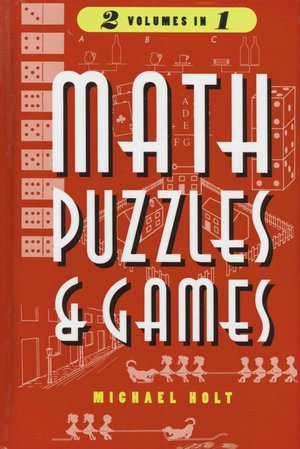
This is a nice little book. A good collection of puzzles concluding with an excellent set of games such as nine men's morris and tactix. It's also another example of the cheap but deserving books Barnes and Noble used to find and republish. They've shut down that division but it's still worth seeking the imprints out when you're in a used book store.
More Alexandria Word Searches
In a previous post, I mentioned a hexagonal variation on the old-fashioned word search. If you enjoyed those, here are a few more for you.
Moons and Planets


Physicists

Bogart Movies

Subscribe to:
Posts (Atom)