Showing posts with label teaching across the curriculum. Show all posts

Sunday, June 9, 2013

Bookshelf: a pretty good little book on row games

I didn't actually have high hopes when I came across this in a library game section but I was pleasantly surprised. Lots of interesting variants and plenty of opportunities for introducing mathematical topics and teaching across the curriculum.


Tic Tac Toe: And Other Three-In-A Row Games from Ancient Egypt to the Modern Computer
by Claudia Zaslavsky

Wednesday, April 3, 2013

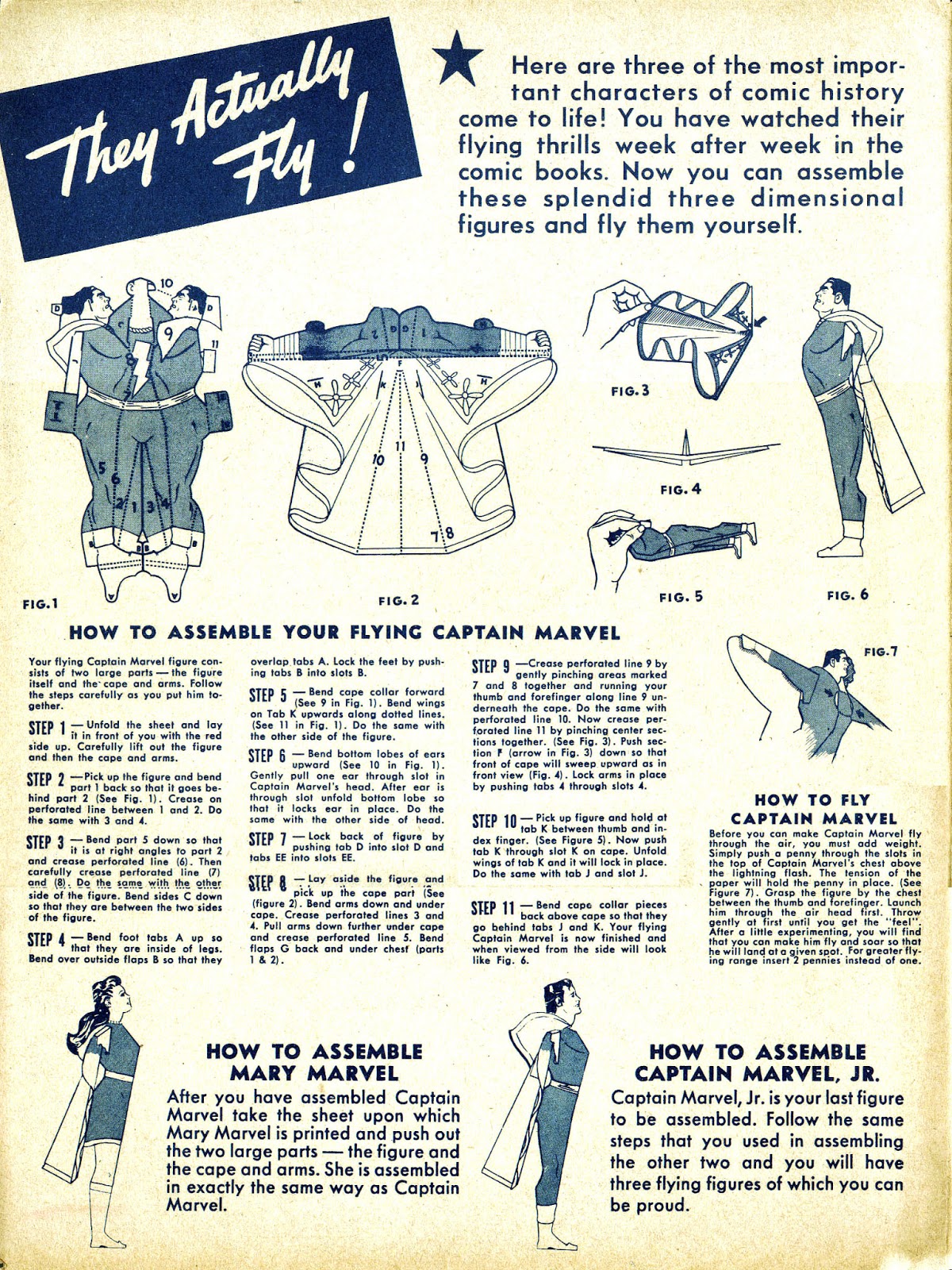
Captain Marvel paper airplanes from 1945

More in the ongoing series on paper-based manipulative and projects.

I came across these online and I have no idea how well they actually fly, but given that we're talking about paper airplanes in the shape of cartoon characters, they should be a fairly easy sell.

Here are some thoughts on how to build a lesson plan around these toys. (I'd use the heaviest paper your photocopier can handle).

Since these actually WWII era toys, there's an obvious opportunity for teaching across the curriculum.

Try a basic statistics exercise by doing multiple tests of all three, recording distance and glide time and plotting the results.

Have kids come up with their own designs along the basic lines of these planes but with different themes and characters.

Tie this in with other paper airplanes and models.


From Just a Pile of Old Comics

Friday, December 28, 2012

Risky Business -- board game math lessons


"Let's play Twister; let's play Risk."

No, seriously, let's play Risk, or at least talk about playing Risk. In case you're not familiar with the game, here's the Wikipedia summary
Risk is a turn-based game for two to six players. The standard version is played on a board depicting a political map of the Earth, divided into forty-two territories, which are grouped into six continents. The primary object of the game is "world domination," or "to occupy every territory on the board and in so doing, eliminate all other players."[1] Players control armies with which they attempt to capture territories from other players, with results determined by dice rolls.
(invented by the director of the Red Balloon -- who knew?)


Risk can be a good taking off point for a number of lessons and assignments like:

1. Strategic thinking -- break the class into groups, have them write up rules and recommendations for the game then test these ideas in a tournament

2. (not math but why should that stop you?) -- what modern countries and provinces correspond to the regions on the board? What are they like? You might add naming these countries as a condition for conquering a region.

3. Probability -- what are the chances of taking a country with j attackers and k defenders? What's the expected strength of j if there is a conquest, k if the attack is repulsed?

But the main lesson I'd like to suggest is an introduction to graphs. We have other graph based games and puzzles in our tool chest such as doublets and the six degrees game but Risk is probably the most familiar to the kids. More importantly, it requires actually working with graphs as part of a larger problem.

After the students are acquainted with the game, explain the basic terms of graph theory then show them something like this subgraph of North America


Ask the students to do the following (After checking to make sure I got this right) :

1. Fill in the other countries

2. Explain what's special about nodes like Alaska and Greenland

3. Draw subgraphs of each continent

4. Find the shortest path between various pairs of countries
  4b Find the shortest path between various pairs of countries when certain territories (particularly Russia) are blocked
  4c (advanced) With randomly placed armies, see which path would be easiest to conquer

5. Play a game on a node and edge board

6. Make up new node and edge boards. Give the territories real or mythical names. Try playing a few games on them.


Wednesday, December 12, 2012

The Blue and the Gray


The famous game designer,* Sid Sackson, had over eighteen thousand games in his personal collection so making his short list was quite an accomplishment, particularly for a game that almost nobody has ever heard of.

On this alone, the Blue and the Gray would be worth a look, but the game also has a number of other points to recommend it: it only takes about three minutes to learn (you can find a complete set of rules here); it is, as far as I know, unique; it raises a number of interesting and unusual strategic questions; and for the educators out there, its Turn-of-the-Century** origins provide some opportunities for teaching across the curriculum. My only major complaint is that it requires a dedicated board, but making your own shouldn't take more than a few minutes.

The object of the game is to be the first to get your general to the center by moving along the designated path while using your soldiers to block your opponent's progress. Since soldiers can capture each other, the game has two offensive options (capturing and advancing) compared to one defensive option (blocking). (Something I learned from developing my own game was the more the designer can shift the focus to offense, the better and faster the game will play.)

I don't know of any attempt to do a serious analysis of the Blue and the Gray. Might be fun to look into. If someone out there finds anything interesting, make sure to let us know.


* Yes, I did just use the phrase, 'famous game designer.'

** I'm going off memory here about the age of the game. You should probably double check before building a lesson plan around this. (see update)

From West Coast Stat Views

UPDATE:

Via the good people at the University of Maryland, here's the original patent from 1903.

Sunday, December 2, 2012

Archimedes' Revenge


Archimedes' Revenge by Paul Hoffman

It's been a few years since I read this but it made a good impression on me at the time and a few of the sections (on voting paradoxes, cryptography and topology, particularly the role it played in the side effects of thalidomide). I'm not sure how well the computer science section holds up, but it's definitely worth a look.

Friday, November 23, 2012

Agon -- the classic game you've probably never heard of


I don't know exactly what happened to Agon, but I'm pretty sure those damned orthogonalists had something to do with it. The game was all the rage in Victorian England where it was appreciated for its simple rules but surprisingly complex strategies. (the Victorians were also big fans of Lewis Carroll's Doublets, thus showing remarkably good taste in diversions.) The game was and is remarkably challenging and enjoyable but early in the Twentieth Century it faded away, perhaps due to the hegemony of orthogonal game boards.

You can find a complete set of rules on my game site. You can also buy boards there but obviously waiting for delivery would undercut the whole 'here's a game for this weekend' concept so I've included two JPEGs that you can print off if you can't find a suitable substitute (lots of games use a 6x6x6 hexboard so locating one shouldn't be that difficult).


The game is extraordinarily easy to learn. Each player starts out with six pawns and a queen spread out around the edge out the board.

A piece can either move around a concentric hexagon or go toward the center. The object is to get your pieces arranged like this (black wins):

'Capturing' is done in the style of many older games by placing two of your pieces on either side of the opponent's piece. I put the word in quotes because a captured piece is not removed from the board. Instead, it is moved back to the outer ring. Agon is therefore entirely a game of position. Novice chess players have a tendency to play for points and measure how well they're doing by how many of their opponent's pieces are lined up by the side of the board. Learning Agon can help break them of some bad habits.

I first came across Agon in David Parlett's Oxford History of Board Games -- an excellent resource if you're thinking about teaching a math class and not a bad read if you just enjoy games. Parlett is also a game designer of some note so he brings a lot of insight to the discussion.

Originally posted in West Coast Stat Views

Sunday, November 18, 2012

The Number-line Code


This one grew out of some time I spent recently helping a family first-grader with her subtraction homework. I made up some sheets with numbers and letters. My original thought was just to make the practice sheets more interesting by having the answer spell out a word, but I noticed my tutoree (who naturally has very good math genes) had, without prompting, started using the code key as a number line to figure out the answers.

The more I thought about it, the more I liked the idea of using this approach for a wide range of problems. For the very early grades, it teaches numbers and letters. It has great appeal for kids (particularly if presented with the right air of mystery -- I'd suggest a pirate motif). It reinforces the number line concept and the essential idea of looking things up in tables.

Here are some sample problems

For those learning to read, present it as a straightforward code:

PIRATES LOVE 7-15-12-4

For slightly more advanced students, replace the numbers with problems


PIRATES LOVE

10 - 3

10 + 5

6 + 6

6 - 2

For even more advanced students, make it a more explicit number line exercise

PIRATES LOVE


7

+8

-3

-8


You can even play with functions by using the old SAT trick of using a circle to represent x+1 and a triangle to represent x-1 (or any other functions you can think of).

triangle 8
circle 14
circle 11
triangle 5

I'd suggest using this technique frequently enough to keep the familiarity high. It also offers extensive opportunities for teaching across the curriculum.

Anyone have any other ideas?